Termites are quiet. That’s what makes them dangerous. By the time most people notice something’s wrong with a piece of furniture, the damage has often been building for months, hidden inside the wood, out of sight, until a drawer suddenly feels flimsy or a table leg gives way under normal weight.
If you own solid wood furniture, a sheesham bed, a dining table, a wardrobe, termite prevention isn’t something to think about only when you spot a problem. It’s ongoing maintenance, the same way you’d polish or dust your furniture. This guide covers how to spot an infestation early, what to do about it, and how to keep it from coming back.
Why Wooden Furniture Is Vulnerable to Termites
Termites feed on cellulose, which is what gives wood its structure. Solid wood furniture is real, natural material, which is exactly why it looks and feels the way it does, but that also means it’s a food source if the right conditions line up.
A few conditions make an infestation far more likely:
- High humidity or damp rooms, especially during monsoon
- Poor ventilation, particularly in wardrobes and storage units that stay closed most of the time
- Furniture placed directly against a damp wall or floor
- Untreated exposed wood, like the underside or back panels that don’t get the same polish or finish as visible surfaces
None of this means solid wood is a bad choice, if anything, well-made solid wood furniture holds up far better long-term than cheaper alternatives. It just means a bit of preventive care goes a long way.
Signs of Termite Infestation to Watch For
Catching this early is the difference between a quick fix and having to replace an entire piece of furniture. Look out for:
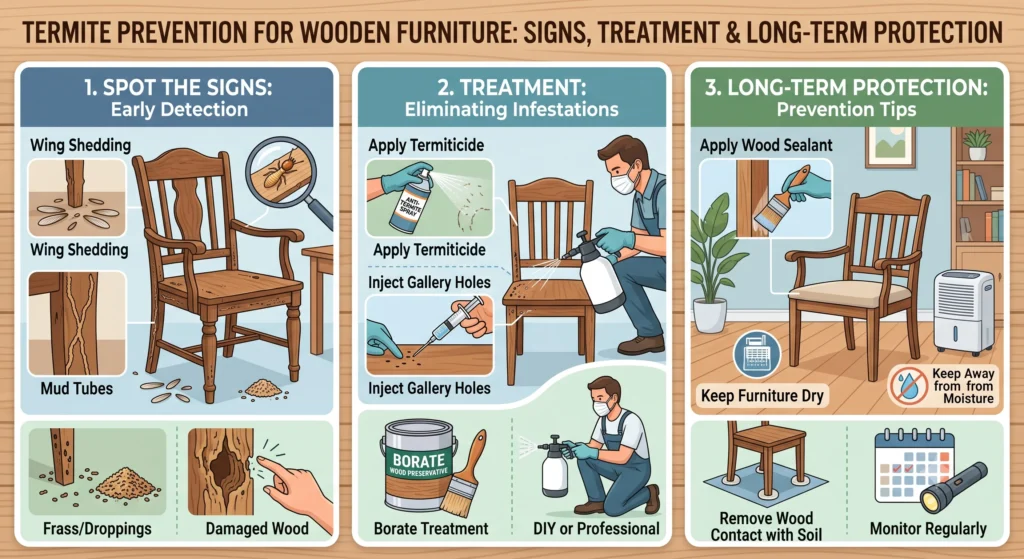
- Hollow-sounding wood tap the surface gently; healthy solid wood sounds solid, infested wood sounds papery or hollow
- Fine powder or sawdust-like droppings near legs, joints, or on shelves inside a wardrobe
- Small holes or tunnels on the surface, especially near corners and joints
- Mud tubes thin, pencil-width tracks, usually near where furniture touches a wall or floor
- Peeling or bubbling polish/paint that looks like moisture damage but doesn’t go away
- A faint clicking sound if you put your ear close to the wood (soldier termites make this as a warning signal to the colony)
If you notice even one or two of these, it’s worth acting immediately rather than waiting to see if it gets worse. It almost always does.
How to Treat an Early-Stage Infestation at Home
If you’ve caught it early, a small patch, one piece of furniture, no widespread damage, a DIY approach usually works well.
Step 1: Clean the furniture thoroughly Dust and old polish can stop treatment products from being absorbed properly. Wipe down the entire surface, including joints and undersides, before applying anything.
Step 2: Find every affected spot Don’t just treat the obvious area. Check joints, legs, the back panel, and anywhere the piece touches a wall or floor, termites travel, so there’s often more damage nearby than what’s visible on the surface.
Step 3: Apply an anti-termite wood treatment A good termite spray or wood protection treatment (available at most hardware stores) works by penetrating the surface and creating a barrier that termites can’t survive in. Apply it evenly, with extra attention to cracks, joints, and any holes.
Step 4: Let it dry completely Don’t use or move the furniture until it’s fully dried, as per the product’s instructions. This is what allows the protective barrier to actually set.
Step 5: Reapply periodically One treatment isn’t a permanent fix, think of it as a preventive layer that needs topping up every so often, especially in humid climates or homes near ground level.
When DIY Isn’t Enough
A spray or home treatment works well for isolated, early-stage problems. But call in a professional pest control service if:
- The infestation covers multiple pieces of furniture or has spread to fixed structures like doorframes or flooring
- You keep seeing the same signs return within a few months of treating it
- The wood is structurally weakened, sagging, cracking, or unsafe to use
There’s no shame in this some infestations are simply beyond what a spray can fix, and catching that early saves you from losing the furniture entirely.
Long-Term Termite Protection: What Actually Works
Prevention is genuinely more effective, and far cheaper, than treatment after the fact. A few habits make a real difference:
- Keep furniture dry. Don’t push wooden pieces directly against a damp or seepage-prone wall. Leave a small gap where possible.
- Ventilate closed furniture. Wardrobes and cabinets that stay shut for long periods trap moisture — open them up regularly, especially during monsoon.
- Fix leaks immediately. A slow leak near a wooden almirah or bed frame is one of the most common causes of termite problems in Indian homes.
- Inspect during monsoon and post-monsoon. This is peak termite season across most of India a quick check every few weeks during this period catches problems before they spread.
- Reapply protective treatment periodically. Even furniture that’s never had a problem benefits from preventive treatment once a year, particularly ground-floor homes or those near a lot of moisture.
- Don’t ignore small polish bubbles or peeling. It’s tempting to assume it’s just old polish, but it’s worth checking underneath before dismissing it.
A Note on Solid Wood vs. Cheaper Alternatives
This is also where solid wood earns its price tag. Furniture made from plywood or MDF with a wood-look veneer tends to hide termite and moisture damage worse, because the core material breaks down structurally much faster once compromised, and there’s often no repairing it. Solid wood, properly treated and maintained, can usually be repaired, retreated, and refinished even after a minor infestation one more reason it lasts generations rather than years.
Frequently Asked Questions
What is the best termite treatment for wooden furniture?
A dedicated anti-termite spray or wood protection treatment made for household furniture works best for most homes. Look for one that’s designed to penetrate the wood surface rather than just sit on top, since that’s what creates a lasting barrier.
Can I treat termites in furniture myself, or do I need a professional?
DIY treatment works well for early-stage or isolated infestations, a single piece of furniture, a small area, no structural damage. If it’s widespread, keeps coming back, or the wood is already weakened, it’s time to bring in a pest control professional.
How often should wooden furniture be treated for termites?
Once a year is a reasonable baseline for preventive treatment, though homes in humid regions or near ground level may want to do it more often especially right before or after monsoon season.
Does sheesham wood attract termites more than other wood?
No, sheesham is actually a naturally dense, durable hardwood that’s more resistant to pests than many softer woods. Termite risk has far more to do with moisture, ventilation, and how the furniture is cared for than with the wood species itself.
What are the earliest signs of termite damage in furniture?
Fine sawdust-like droppings near joints or on shelves, a hollow sound when you tap the wood, and small holes or thin mud tubes near where furniture meets a wall are usually the first visible signs, often appearing weeks or months before any structural damage is noticeable.
Termite Prevention for Wooden Furniture
Instagram Follow :- Queenwood.in
Contact Support Email :- support@queenwood.in